Faenza, December 22, 2025. The Caviro Group shareholders’ meeting, held today in Faenza, approved the financial statements for the fiscal year ended August 31, 2025.
Caviro, at the head of a supply chain of 11,500 winegrowers, closed the 2025 fiscal year with consolidated revenues of €351 million, reflecting a rationalization of volumes in the B2B strategic business unit and a mix increasingly focused on profitability.
EBITDA stood at €29 million (8.3% of revenues), while EBIT returned to positive territory at €5.7 million following the normalization of provisions. Net income rose to €2.3 million, up from €1.1 million in 2024. The financial structure showed significant improvement: the net financial position decreased from €80.3 million to €66.5 million, while equity increased to €128 million, strengthening the Group’s financial autonomy.
The Caviro Group confirms its leadership in Italy by market share, operating along the entire wine supply chain with an integrated model focused on quality, sustainability, and circular economy. “The socio-political scenario calls for a reflection on redefining global balances—a constant change that Caviro must face,” emphasized Carlo Dalmonte, President of Caviro Group. “Added to this are the challenges of the wine sector: the structural decline in global consumption is a complex phenomenon that can no longer be addressed solely by seeking new markets. In such a demanding year, we are proud to have defended the Group’s profitability. The results achieved are not an endpoint but a foundation on which to build the new fiscal year and tackle the coming months of work.”
Wine: Volumes Down, Margins Up
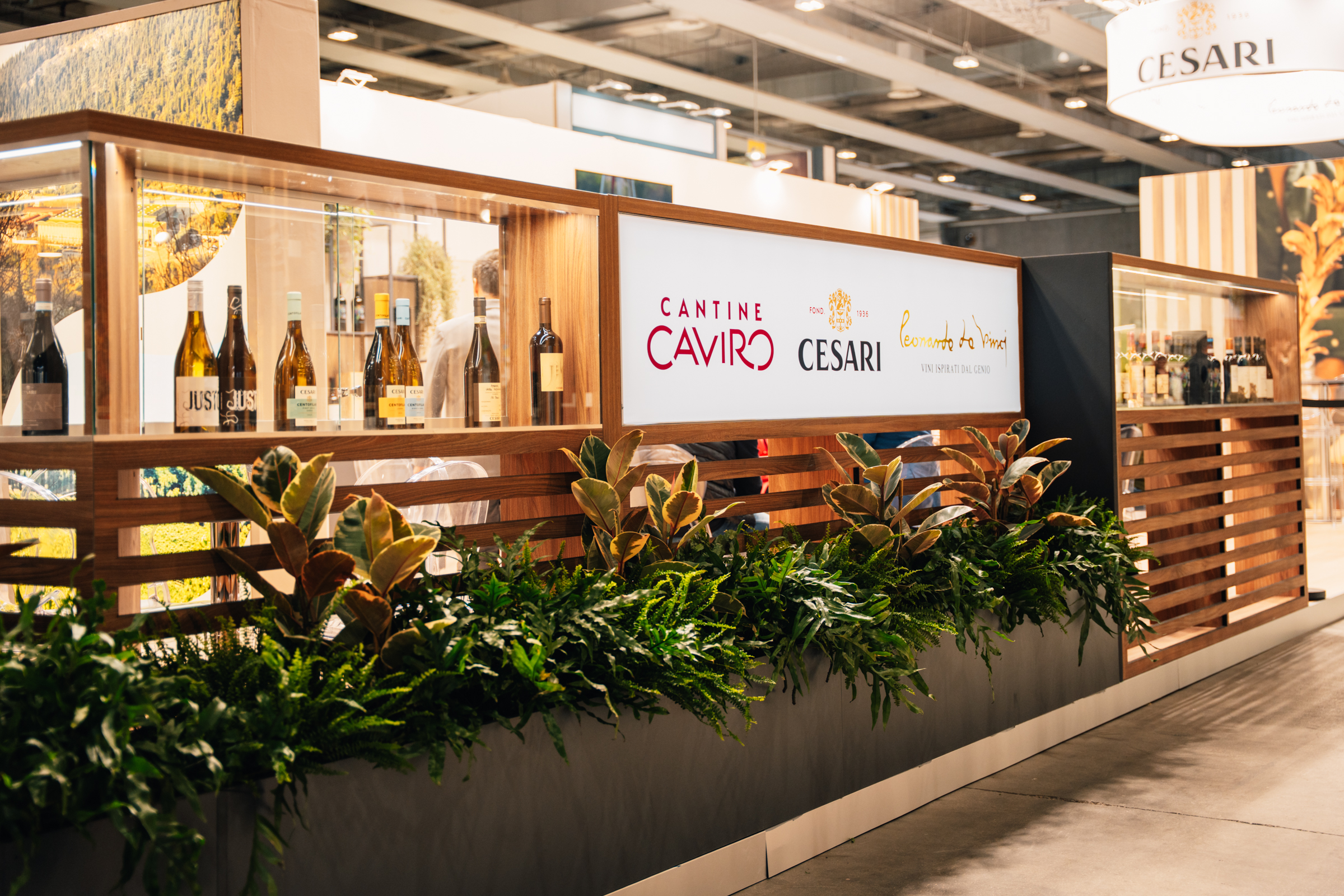
As in the previous fiscal year, the positive results of the wine division drove the 2024–2025 fiscal year. Through careful cost control and diversification of its product range, the company consolidated its market share, ensuring steady margin growth despite declining sales volumes. “In line with the defined strategy, the wine division has been consolidated into two assets,” added Giampaolo Bassetti, General Manager of Caviro Group. “On one side, Cantine Caviro, with all the brands that best represent our member winegrowers from North to South. On the other, Tenute Caviro, created to enhance the most renowned Italian wine regions, currently including Chianti and Valpolicella, where the Group owns companies through its subsidiaries Leonardo Da Vinci Spa and Gerardo Cesari Spa.”
From Fine Wines to Tavernello’s New Face
The Tenute Caviro division delivered excellent performance both in the Horeca channel—strengthening its presence in high-end restaurants and hospitality—and in large-scale retail, where enhanced distribution ensured solid results.
In the mass-market segment, the Group undertook a strong reinforcement of the daily wine category in retail, leveraging Tavernello’s iconic status and a diversification strategy aligned with new consumption trends, as demonstrated by the launch of Tavernello Spritz. Targeted market actions and holistic campaigns, such as those focused on Tavernello Frizzante—which recorded substantial volume growth—confirm Caviro’s ability to innovate the language of everyday wine. Looking ahead, Tavernello is set for a major relaunch, development, and communication plan in 2026, reaffirming its position as the Group’s most iconic brand.
Materials and Bioenergy
The Materials and Bioenergy division strengthened its leadership in circular economy thanks to investments made over the past two years, particularly in the subsidiary Caviro Extra.
“In 2025,” highlighted Valentino Tonini, General Manager of Caviro Group, “we completed a series of extraordinary investments, first and foremost the new plant in Faenza for the production of natural tartaric acid: a €20 million project that brings excellence to Romagna, doubling our capacity to transform waste into valuable resources for global markets. Additionally, just weeks ago, we renewed the framework agreement between Herambiente and Caviro Extra, extending until 2035 the equal joint venture Enomondo for biomass recovery and the production of renewable energy and natural fertilizers.”
Technological Innovation and ESG Goals
The 2024–2025 fiscal year also saw technical investments in the wine sector, with a strong focus on process efficiency and ecological transition. These interventions targeted key assets for business competitiveness, combining technological innovation with ESG objectives. “We finalized high-profile technological projects,” commented General Manager Giampaolo Bassetti, “such as the advanced agrivoltaic plant—the largest in Italy—which became fully operational during the fiscal year. It allows us to protect crops while achieving energy self-sufficiency. These are concrete steps toward a safe and resilient production model, aligned with our historic commitment to circular economy, demonstrating how innovation can translate into environmental and social value.”